
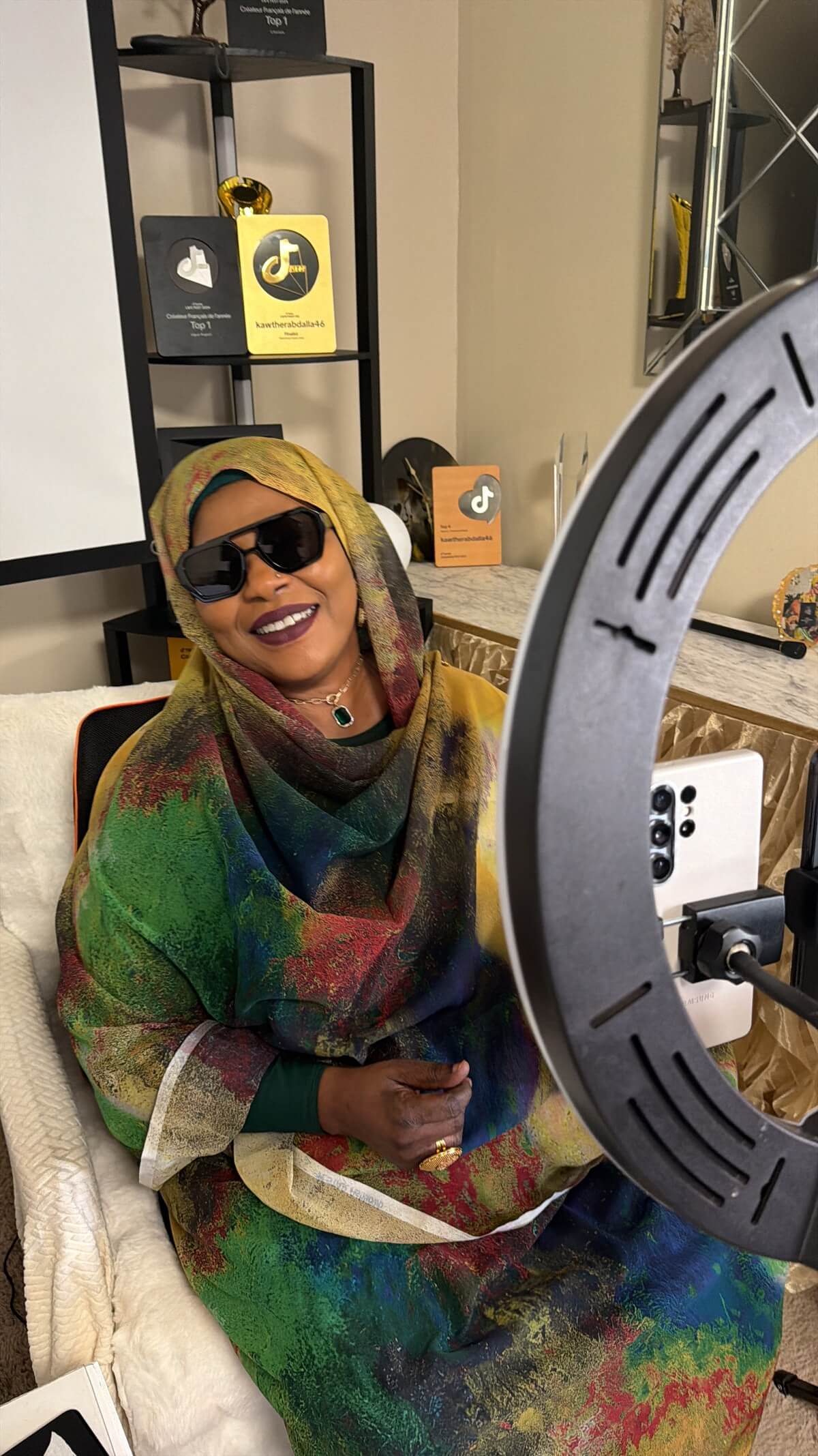
Long before social media gave me a platform, the stories that shaped my life were told under trees, around shared meals and in the homes of elders in Omdourman, Sudan. Today, through YouTube and TikTok, I continue that tradition in a different way. My name is Kawther Abdalla, popularly known as Mama Koki, and storytelling has become my way of connecting with people, encouraging women and keeping the values of my childhood alive.
Table of Contents
Growing Up in Omdourman: Where My Love for Stories Began
Some of the most important lessons in my life did not come from a classroom. They came from the people and experiences that surrounded me while growing up in Omdourman, Sudan.
I remember a neighbourhood where people shared whatever little they had. The mothers would come together to prepare a large pot of soup, which we would eat with kisra under a tree. While they prepared coffee and exchanged stories, we children played around them.
As evening approached, another tradition would begin. We gathered in someone’s home to listen to the elders tell stories, a tradition we call hajî in Sudan.

Those evenings were special. The stories were not simply entertainment; they carried lessons about honesty, courage, responsibility and the consequences of our actions. Without necessarily realising it at the time, we were learning about life, relationships and the importance of treating people with kindness.
My parents also placed great importance on education. Together, these experiences shaped my understanding of community, solidarity and the responsibility we have towards one another.
Today, when I tell stories about everyday life, I often find myself returning to those childhood memories. I believe a good story can communicate important lessons without making people feel as though they are being lectured.
From Writing Short Stories to Becoming a Digital Storyteller
Writing was my first creative outlet. It gave me a place to express my emotions, explore questions and make sense of situations I had experienced or observed.
I began turning these experiences into short stories, including The Difficult Passage and The Intruder. Later, I started sharing my writing on Facebook and created discussion groups where people could exchange opinions and experiences.
Through those interactions, I began noticing something important. Some people were looking for more than written stories. They wanted someone who could listen, understand their difficulties and offer thoughtful guidance.
I started recognising the need for a familiar, reassuring voice, particularly for women who sometimes struggled to find someone outside their immediate families with whom they could openly discuss personal matters.
Initially, because of the conservative environment around me, I preferred to publish my content without showing my face. I wanted the stories to speak for themselves.
However, after settling in France, I gradually became more comfortable expressing myself through short videos. I eventually expanded my creative journey to YouTube and TikTok.
The platforms changed, and the way I communicated evolved, but my original motivation remained the same: to use storytelling to connect with people and encourage meaningful conversations about everyday life.
How I Became Mama Koki: A Name Built on Trust and Affection
The name Mama Koki did not emerge from a carefully designed branding strategy. It grew naturally from my interactions with women who followed my work.
Some of these women were orphans. Others lacked adequate support systems or simply needed someone they could trust enough to discuss their personal challenges.
They began reaching out to me, sharing their experiences and seeking advice. I listened, respected their confidences and tried to offer support whenever I could.
Over time, the name Mama Koki became associated with the affection and trust they had developed towards me.
To me, it represents a relationship built on listening, understanding and human connection.
But behind the public name is Kawther Abdalla, a woman with her own experiences, struggles and aspirations. I am not someone who has all the answers to life’s difficulties. I am simply someone who believes that listening to another person, showing compassion and sharing what we have learned can make a difference.
Why Listening to Women Matters
One thing I have learned through my interactions with women is that sometimes, people do not necessarily need someone to tell them what to do. They first need someone willing to listen.
A woman going through a difficult experience may already be dealing with fear, uncertainty, disappointment or emotional pressure. Being judged or having her decisions dictated to her can make an already difficult situation even harder.
My approach is to listen attentively and without judgment.
I want women who reach out to feel heard, understood and respected. I can remind them of their worth, their abilities and their rights, but I also believe that every woman should have the freedom to make decisions about her own life.
I do not see my role as deciding how another person should live. Instead, I hope to help people reflect, recognise their value and find the confidence to make choices that are right for them.
Trust is not something that should be demanded. It is built through consistency, respect and the understanding that every person’s experience deserves to be treated with dignity.
Storytelling with Responsibility: Protecting the People Behind the Stories
When people share personal experiences with me, I understand that they are placing a certain level of trust in my hands. That responsibility is something I take seriously.
I draw inspiration from the storytelling traditions of my childhood, particularly the way elders used stories to communicate lessons about life and human behaviour.
When I want to address social realities or sensitive issues, I sometimes use storytelling and dramatic fiction rather than exposing the actual experiences of individuals.
I change the circumstances, backgrounds and identifying details to protect the people involved. My intention is never to expose someone’s private life for entertainment or attract attention through another person’s suffering.
I believe stories should encourage reflection, compassion and understanding, not humiliation or sensationalism.
For me, protecting people’s identities is just as important as communicating the message behind a story.
Carrying My Sudanese Heritage to France and Beyond
Although I now live in Strasbourg, France, my Sudanese heritage remains an important part of who I am.
I carry memories of Omdourman wherever I go: the mothers preparing meals together, the aroma of coffee, conversations between neighbours and the evenings when we gathered to listen to the elders.
Those experiences taught me the importance of sharing, sincerity, honesty and courage.
I see a connection between the community I grew up in and the work I do today. Whether I am creating a video, listening to a woman who needs encouragement or participating in voluntary activities, I am still practising some of the values I learned during childhood.
Moving to another country has changed my surroundings, but it has not changed the importance I attach to human relationships and community.
I want to continue carrying those values into the digital spaces where people from different backgrounds can encounter my stories.
For me, preserving my heritage does not mean simply remembering the past. It means keeping its positive lessons alive through the things I do today.
My Message to African Women: Your Worth Goes Beyond How Others See You
If there is one message I would like women to take from my journey, it is that their value should never be determined by their appearance, relationship status or the opinions of other people.
Every woman has abilities, rights, aspirations and the potential to build something meaningful with her life.
I encourage women to invest in themselves. Learn something new, develop a talent, acquire useful skills or begin working towards a personal project, no matter how modest it may appear.
Sometimes, taking the first step towards something you believe in can help rebuild confidence and create new possibilities.
For women going through difficult moments, I hope they find people they can trust and the support they need. Nobody should have to feel that they must face every challenge alone.
I am also grateful to the people who support my work and participate in the spirit of mutual encouragement that has become an important part of this journey.
I often think about the neighbourhood where I grew up. Under that tree, nobody was expected to provide everything. Everyone contributed whatever they could.
That is the spirit I want to preserve: the understanding that even when we do not have much, we can still make a difference in someone’s life.
The Story Continues
When I look back at my journey, I see a connection between the little girl who listened to stories in Omdourman and the woman who now shares stories through a camera.
I started by writing about experiences, emotions and situations around me. Over time, those words found new expressions through videos and conversations with people from different backgrounds.
Today, Mama Koki represents more than a name on social media. It reflects a relationship with an audience built around storytelling, listening, encouragement and mutual respect.
I do not know every direction this journey will take, but I know the values that brought me here are still important.
I want to keep telling stories that make people think, encourage women to recognise their worth and remind communities that compassion is still one of the most valuable things we can offer one another.
Perhaps that is the greatest lesson I carried from my childhood in Omdourman: we may not always have the power to change someone’s circumstances, but we can make sure they do not feel forgotten or alone.