
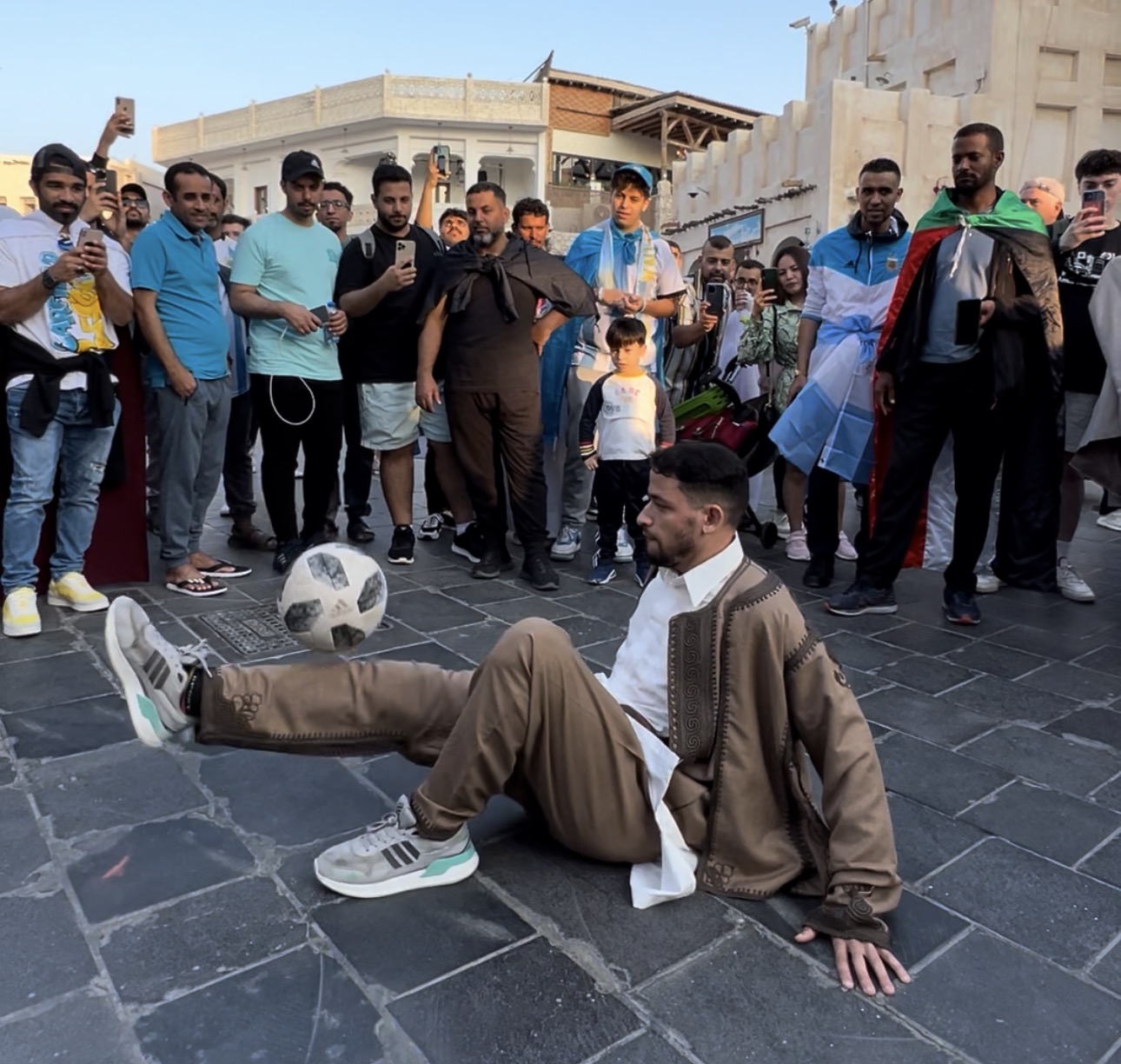
From the streets of Ajdabiya to the international freestyle football community, Faraj Rahil is using creativity, sporting talent and traditional Libyan attire to tell a story about identity, belonging and the power of African self-expression.
Football can be many things. For some, it is a game. For others, it represents opportunity, competition, entertainment or even a way out of difficult circumstances. But for Faraj Rahil, a Libyan freestyle football athlete popularly known as Rahil Freestyle, it has become something more: a language through which he expresses his identity, celebrates his heritage and connects with the world.

His journey began in 2014, when he was 17 years old. Growing up in Ajdabiya, Libya, Faraj became fascinated by the creativity of freestyle football and the extraordinary possibilities of controlling a ball in ways that appeared almost impossible.
Unlike conventional football, where players work within the structure of a team and the rules of a match, freestyle football offers a different kind of expression. It combines athletic ability, imagination, rhythm and individual creativity. Every movement becomes an opportunity to communicate something unique.
For Fara jRahil , that freedom was part of the attraction.
One of his early inspirations was Brazilian football legend <Entity value=”Ronaldinho” category=”athlete” disambig=”Brazilian footballer”/>. Ronaldinho’s creativity, confidence and ability to turn football into entertainment left a lasting impression on him.
Years later, in 2024, Faraj had the opportunity to meet Ronaldinho briefly. It was a meaningful moment in his journey, bringing him face-to-face with someone whose style had helped inspire his interest in freestyle football years earlier.
What started as admiration for another footballer’s creativity had gradually developed into a personal journey of discipline, self-expression and ambition.
Table of Contents
From Personal Passion to Representing Libya
As Faraj continued practising, freestyle football became more than a hobby. It opened the door to a wider community of athletes and creatives connected by a shared passion for the game.
The discipline demanded patience, consistency and countless hours of practice. Behind every impressive trick is a process of repetition, experimentation and learning to control movements with precision.
His dedication began producing results.
In 2020, Faraj won the 1v1 category at the Libyan freestyle football championship, an important milestone that established him within the country’s freestyle football community.
Two years later, he took another significant step by representing Libya at <Entity value=”Red Bull Street Style” category=”sports_event” disambig=”International freestyle football competition”/> 2022, where he progressed to the Online Regional Finalist stage.
These achievements represented more than individual progress. They gave him an opportunity to participate in an international sporting culture while carrying the name of his country into a wider community.
For a young athlete from Libya, international visibility also carries a particular significance.
Faraj believes that Libya has more stories to offer the world than the images that frequently dominate international conversations about the country. Beyond those familiar narratives are young people with talent, ideas, creativity and ambitions that deserve to be seen.
His own journey is one example of that wider reality.
When Culture Becomes Part of the Performance
Perhaps the most distinctive aspect of Faraj’s freestyle football journey is how he incorporates traditional Libyan clothing into some of his performances.
In a discipline where athletes often distinguish themselves through technique, style, music and personal presentation, clothing can become part of the creative experience.
For Faraj, however, wearing traditional Libyan attire is not simply a performance choice or a decorative addition. It is an expression of identity.
It is a way of communicating where he comes from, even while participating in a global sporting discipline that connects people across different cultures and nationalities.
The football may be understood everywhere, but the person controlling it comes from somewhere specific.
That idea gives his performances a cultural dimension that extends beyond the technical difficulty of the tricks themselves.
By bringing elements of Libyan heritage into freestyle football, Faraj demonstrates how contemporary creative expression and cultural identity can exist together. A young African athlete does not have to abandon the symbols of his heritage to participate in a global community. Instead, he can make that heritage part of what makes his contribution distinctive.
His approach also raises a broader question about representation: How can young Africans participate in global creative spaces while ensuring that their cultures, histories and identities remain visible?
For Faraj, one answer is simple. He brings a part of Libya with him wherever his performances take him.
Giving Libya a Different Story to Tell
International perceptions of countries are often shaped by a limited number of images and narratives. Unfortunately, the creativity, aspirations and everyday achievements of young people can receive far less attention.
Faraj wants audiences to see another dimension of Libya.
He hopes to use freestyle football, digital content creation and engagement with young people to demonstrate that Libya is also home to individuals pursuing creative ambitions and finding ways to participate in the wider world.
His intention is not to suggest that his experience represents every Libyan young person. Rather, his journey offers one perspective on the country’s emerging creative possibilities.
Through his content and sporting activities, he hopes to encourage other young people to explore freestyle football, develop their abilities and discover their own forms of self-expression.
His message is particularly relevant to young Africans who may feel that opportunities in creative industries are limited by geography, resources or the absence of established platforms.
Faraj’s experience suggests that creativity can provide a way to build connections beyond geographical boundaries. A passion developed in one community can eventually become part of a much larger conversation.
More Than Winning Competitions
For many athletes, success is measured through championships, rankings and international recognition. These achievements matter, and Faraj’s progress in freestyle football demonstrates the value of dedication and consistent practice.
But his ambitions extend beyond competition results.
He wants to continue developing as an athlete and content creator while using his platform to encourage young people to pursue their interests and express themselves confidently.
His story also offers an important reminder that African identity is not something young people need to leave behind when entering international spaces. It can be a source of creativity, confidence and distinction.
From beginning freestyle football at 17 to winning a national championship, representing Libya at Red Bull Street Style and meeting one of his childhood inspirations, Faraj Rahil has built a journey around a simple passion that continues to evolve.
Yet, perhaps the most interesting part of his story is not the number of tricks he can perform or the competitions he has entered. It is what he chooses to communicate through them.
Football connects him to a global community. His traditional clothing connects him to his heritage. His creativity gives him a way to bring both worlds together.
And in doing so, Faraj Rahil Freestyle is showing that sometimes, the most powerful thing an athlete carries onto the field is not just talent, but a sense of where they come from.
Because the world may recognise the football, but through his performances, Faraj Rahil wants it to recognise the story of the young Libyan behind it.
You can follow Faraj’s journey on:
Instagram: @rahil.freestyle
TikTok: @farajrahil
YouTube: Rahil Freestyle
Facebook: Rahil Freestyle