
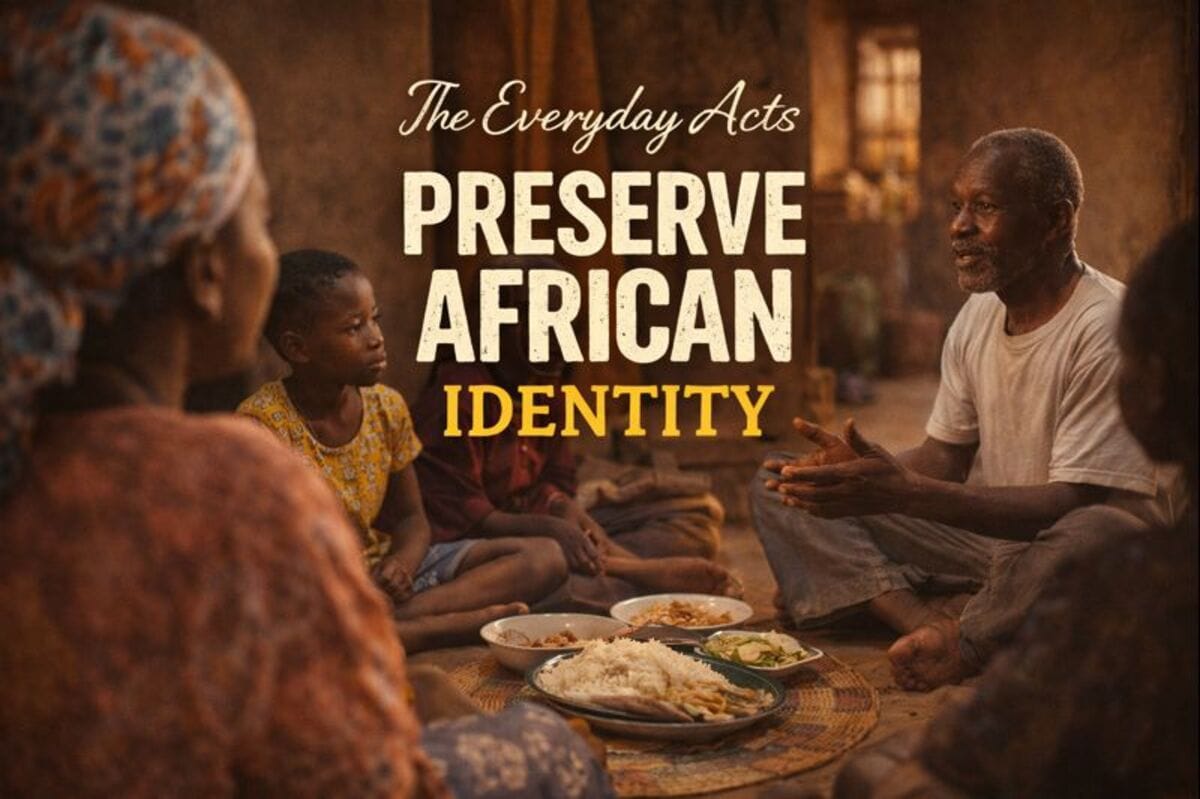
African identity is not preserved only during festivals, ceremonies, or special occasions. It is preserved quietly — in ordinary days, inside homes, through habits that often go unnoticed.
I have learned that culture does not survive because we announce it loudly. It survives because we practice it consistently. Many Africans worry about losing their identity — especially those raising children away from home, or living in a world that constantly asks them to adjust, blend in, and move on. But identity does not disappear suddenly. It fades slowly, when the everyday acts that sustain it are neglected. And it is those same everyday acts that keep it alive.
Table of Contents
Language Spoken at Home, Even When It Feels Inconvenient
One of the strongest carriers of African identity is language. Not the polished kind used for ceremonies or formal gatherings, but the everyday language spoken at home — the one used to call a child, correct behavior, express frustration, or show affection.
I have seen how quickly language fades when it is treated as optional. When it becomes something spoken only when elders visit. When children hear it but are never encouraged to respond in it.
Speaking an African language at home, even imperfectly, preserves more than words. It preserves worldview, humor, values, and emotional expression that cannot be fully translated. Language teaches belonging. Silence teaches forgetting.
Food as Memory, Not Just Nutrition
Food is one of the most underestimated acts of cultural preservation. African meals are rarely just about eating. They are about preparation, patience, sharing, and memory. They teach children where they come from without a lecture.
When we cook the foods we grew up eating — even when ingredients are hard to find or substitutes must be made — we are passing down more than taste. We are passing down history. Every meal prepared intentionally is a reminder that culture lives in routine, not performance.
Storytelling in Ordinary Conversations
African identity has always been preserved through stories. Not only the formal stories told by elders under moonlight, but also the casual ones — stories shared while cooking, walking, or resting. Stories about relatives, villages, struggles, mistakes, and lessons learned.
When children hear where their parents come from, how life was lived, what was endured, they gain context for who they are becoming.
Storytelling grounds identity. Without it, children inherit silence instead of history.
Respect Taught Through Daily Interaction
Respect in African culture is not abstract – It is practiced, It shows: how elders are addressed, how greetings are exchanged. how correction is given and how disagreement is expressed.
These values are not learned through explanation alone. They are absorbed through observation and repetition. When respect is practiced daily, identity becomes embodied — not theoretical.
Community, Even in Small Circles
African identity is deeply communal. Even when living far from home, identity is preserved when Africans gather — in churches, cultural groups, family friends’ homes, or informal networks. These spaces recreate familiarity in unfamiliar environments. Community reminds us that identity is shared, not carried alone. Isolation accelerates forgetting. Connection slows it down.
Discipline Balanced With Care
African upbringing is often misunderstood. Discipline, when practiced with care, teaches responsibility, accountability, and boundaries. When children understand that correction comes from concern, not control, they internalize values rather than fear. This balance — firmness with care — is part of African identity that is passed down daily, not declared once.
Naming Things Correctly
Names matter. Calling people, places, and behaviors by their proper names reinforces identity. When African names are shortened, altered, or avoided for convenience, something subtle is lost. Using names correctly — even when others struggle with pronunciation — affirms belonging and self-worth. Identity weakens when it is constantly adjusted to make others comfortable.
Faith and Moral Frameworks Lived, Not Just Taught
For many African families, faith plays a central role in identity. But it is not preserved by declarations alone. It is preserved through lived example — how challenges are handled, how gratitude is expressed, how hope is maintained during difficulty. Children learn values not from sermons, but from consistency.
Choosing What to Keep, Not What to Abandon
Preserving African identity does not mean rejecting growth or exposure to other cultures. It means being intentional about what is carried forward. Not everything must be held onto. But the core — values, respect, responsibility, community — must be protected deliberately. Identity survives when choices are conscious.
African Identity Is Built in the Ordinary
The everyday acts that preserve African identity are rarely dramatic.
They are:
- Conversations at home
- Meals shared
- Languages spoken
- Stories remembered
- Values practiced
They happen quietly, repeatedly, and intentionally. African identity does not disappear because the world is loud. It disappears when the home becomes silent. And as long as these everyday acts continue, African identity remains alive — not as nostalgia, but as lived truth.